Belogorka Gorge, also known as Tosh-Bulak, is located on the northern slopes of the Kyrgyz Ala-Too Range and is considered one of the best hiking destinations near Bishkek. While the official name is Belogorka, locals almost always refer to the area as Tosh-Bulak, after the nearby village.
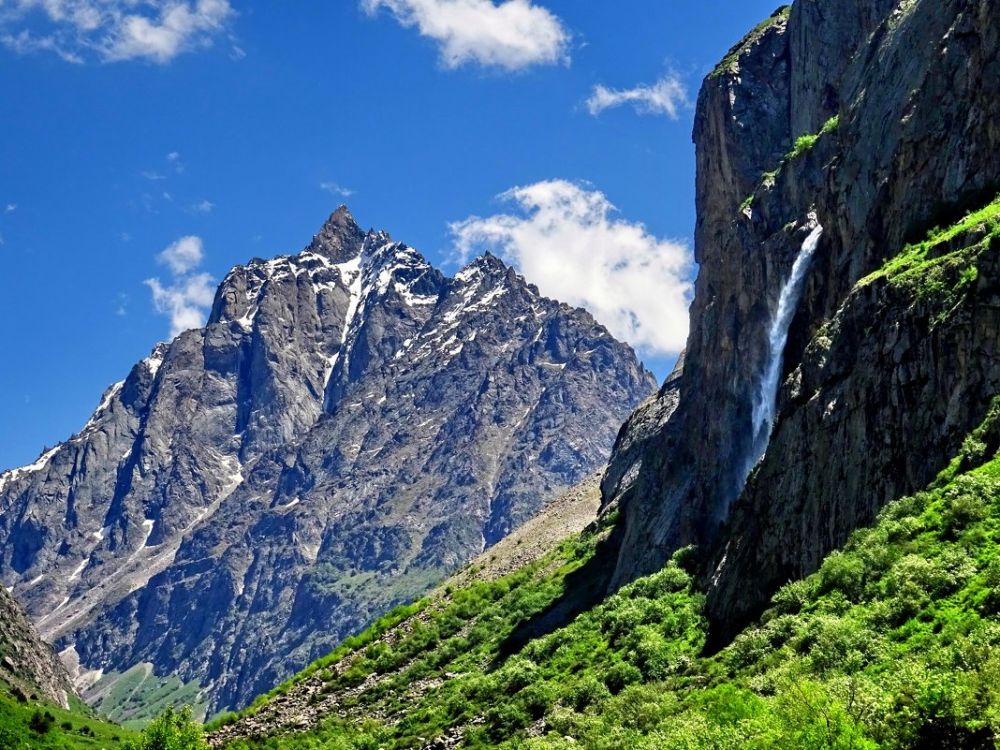
The gorge's main attraction is the famous Belogorka (Tosh-Bulak) Waterfall, the tallest waterfall in Northern Kyrgyzstan. Standing approximately 60 meters high, it becomes a powerful cascade during late spring and early summer. On sunny days, the waterfall can be seen from several kilometers away, and visitors begin to feel the cool mist nearly 200 meters before reaching its base.
Many travelers don't realize that the famous waterfall is only the first of several waterfalls hidden in the gorge. At least two more waterfalls lie farther upstream, although they are rarely visited since most hikers finish their journey at the main cascade.
Another unique feature of Belogorka is its dramatic rock formations. One towering cliff resembles a mountain straight out of The Lord of the Rings, making it a favorite location for photographers. These cliffs are also home to the Himalayan Griffon Vulture, one of Central Asia's largest birds of prey and a protected species listed in the Red Book of Kyrgyzstan. While hiking, it's worth looking up as often as you look down.
For adventurous hikers, the gorge continues toward Borulu Lake, also known as Kok-Kol (Blue Lake). Hidden deep within the Kyrgyz Ala-Too mountains, this remote alpine lake remains one of the least-visited natural attractions in Chuy Region.
History
The gorge takes its name from the nearby village of Belogorka, which was renamed Tosh-Bulak after Kyrgyzstan gained independence. Today, locals almost exclusively use the name Tosh-Bulak, while visitors still commonly refer to the area as Belogorka.
For centuries, the gorge served as a traditional route to high-altitude summer pastures. Nomadic families brought horses and livestock through the valley, while the numerous mountain springs provided fresh drinking water throughout the season.
Today, Belogorka has become one of Chuy Region's most popular hiking destinations, attracting nature lovers, photographers, and outdoor enthusiasts.
Flora and Fauna
The gorge is covered with Tian Shan spruce forests, shrubs, and alpine meadows. During spring the slopes turn bright green, while in summer the mountain river and countless springs keep the valley cool and refreshing.
Wildlife includes marmots, hares, foxes, mountain birds, and birds of prey. The gorge's greatest natural treasure is the Himalayan Griffon Vulture, a protected species that nests on the towering cliffs above the valley.
Location
Belogorka (Tosh-Bulak) Gorge is located in Sokuluk District of Chuy Region, approximately 80 kilometers from Bishkek.
The drive takes around 1.5–2 hours, passing through Tosh-Bulak village before continuing along a dirt road toward the trailhead.
Because of its proximity to the capital, Belogorka is considered one of the best one-day hiking destinations in Northern Kyrgyzstan.
Belogorka (Tosh-Bulak) Waterfall
Belogorka Waterfall is the highlight of the gorge and the tallest waterfall in Northern Kyrgyzstan. Rising approximately 60 meters, it reaches its maximum flow between May and July, when melting snow feeds the mountain streams.
By late summer, the water flow decreases dramatically. In dry years, the stream becomes so thin that much of the water disperses into mist before reaching the ground, and during particularly dry seasons the waterfall may almost disappear.
For this reason, the best time to visit Belogorka is from late spring through mid-summer.
Hiking Trail to the Waterfall
The trail to the waterfall is considered easy to moderate and is suitable for most visitors with average physical fitness.
Trail information:
- Distance: approximately 8 km round trip
- Hiking time: around 3 hours round trip
- Elevation gain: about 300 meters
- Difficulty: easy to moderate
- Best season: May–July
The marked trail ends at the main Belogorka Waterfall. Reaching the upper waterfalls or Borulu Lake requires additional hiking time, good physical fitness, and a local guide.
What to See
Borulu Lake (Kok-Kol)
Most visitors finish their hike at Belogorka Waterfall, but experienced hikers continue toward Borulu Lake, also known as Kok-Kol ("Blue Lake").
The route is significantly longer and more demanding, crossing alpine meadows, rocky terrain, and the upper part of the gorge. There are no roads leading to the lake, making hiking the only way to reach it.
Borulu Lake was formed after the Belovodsk earthquake of 1885, when a massive landslide blocked the mountain river. Today it remains one of the least-visited alpine lakes in Chuy Region.
Rock Formations & Himalayan Griffons
One of Belogorka's most recognizable landmarks is a dramatic rock formation that resembles a mountain from The Lord of the Rings.
These cliffs are home to the Himalayan Griffon, Kyrgyzstan's largest bird of prey and a protected species. With a wingspan approaching three meters, these magnificent birds are often seen soaring above the gorge.
Mountain River
A fast-flowing mountain river runs through the entire gorge, fed by numerous springs and snowmelt from the Kyrgyz Ala-Too Range.
Even during the hottest summer days, the river keeps the valley cool and provides the relaxing sound of rushing water throughout the hike.
Things to Do
Belogorka is an excellent destination for hikers and nature lovers.
Visitors can:
- hike to the tallest waterfall in Northern Kyrgyzstan;
- visit the main waterfall;
- continue toward Borulu Lake;
- photograph spectacular mountain landscapes;
- enjoy a picnic beside the mountain river;
- observe Himalayan Griffon vultures in their natural habitat.
Best Time to Visit
May – July
The best time to visit. During these months the waterfall reaches its maximum flow thanks to melting snow. If you want to see Belogorka at its most impressive, plan your trip for late spring or early summer.
August – September
The waterfall becomes much smaller. In some years the stream is so light that part of the water turns into mist before reaching the ground. Despite this, the hike remains enjoyable thanks to cooler temperatures and lush scenery.
October
Autumn colors transform the gorge into a beautiful hiking destination. Although the waterfall is less impressive, this is one of the best seasons for landscape photography.
Travel Tips
- Visit between May and July for the most impressive waterfall.
- Wear proper hiking shoes, as parts of the trail can be rocky and slippery.
- Bring at least 2 liters of water and light snacks.
- Hire a guide if you plan to continue to Borulu Lake.
- Stay away from slippery rocks near the waterfall during periods of high water.
Frequently Asked Questions
Is the hike difficult?
The trail to the waterfall is considered easy to moderate and is suitable for most visitors with average fitness.
When is the best time to visit?
May through July, when the waterfall is at its fullest.
Can I reach Borulu Lake in one day?
Yes, but it requires good physical fitness, an early start, and sufficient hiking experience.
Why does the waterfall become smaller in summer?
Once the snowmelt season ends, the water volume decreases significantly. During dry years, the waterfall may nearly disappear.
Tours
Belogorka Gorge is one of the best hiking destinations near Bishkek, offering visitors the chance to see the tallest waterfall in Northern Kyrgyzstan and, for experienced hikers, continue toward the remote Borulu Lake.
Ulush Travel offers private and group tours to Belogorka with professional mountain guides, comfortable transportation, and routes suitable for everyone—from a scenic hike to the waterfall to a full-day trek to Borulu Lake.